
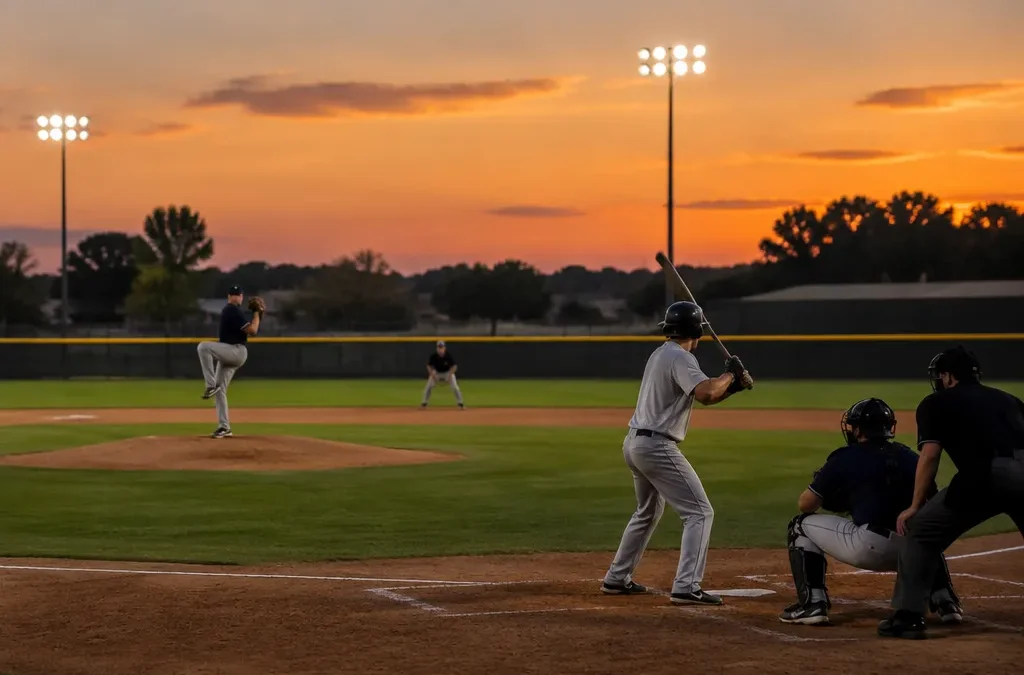
A minor league baseball game usually lasts about two and a half hours. With the pitch clock in place at every full-season level, a nine-inning game in 2024 averaged 2 hours 41 minutes in Triple-A, 2:35 in Double-A, 2:33 in High-A and 2:34 in Low-A. That is roughly the same as a Major League game today.
Games are nine innings, just like the majors. Doubleheaders are usually two seven-inning games, and extra innings start with a runner on second base, so marathon games are rare. If you add time for parking, gates, fireworks or postgame events, plan on about three to three and a half hours for the whole outing.
What Time Does a 7 p.m. Minor League Game End?
A 7:05 p.m. first pitch usually means a final out somewhere around 9:30 to 9:45 p.m. A fast game with few pitching changes can wrap up closer to 9:15. Add 15 to 20 minutes on fireworks nights, and more if rain moves in. Day games on weekends follow the same math, so a 1:05 p.m. start usually ends around 3:30 to 3:45 p.m.
How Many Innings in Minor League Baseball?
A standard minor league game is nine innings at every level, from Single-A to Triple-A. There are three main exceptions:
- Doubleheaders: when two games are played on the same day, both are usually shortened to seven innings.
- Extra innings: a tied game keeps going past the ninth, one inning at a time, until someone leads after a full inning.
- Rain: if weather stops play, a game can become official after five innings, or four and a half if the home team is ahead. A shortened game counts as complete.
Minor league baseball does not use a mercy rule, so a lopsided game still goes the full nine innings.
Average Length of Minor League Games by Level
Here are the average times for a nine-inning game in 2024, as reported by Baseball America, next to the last season before the pitch clock arrived.
| Level | Average nine-inning game (2024) | Pitch clock |
|---|---|---|
| Triple-A | 2:41 | Yes |
| Double-A | 2:35 | Yes |
| High-A | 2:33 | Yes |
| Low-A (Single-A) | 2:34 | Yes |
| Rookie ball (complex leagues) | 3:09 | No |
| All full-season levels, 2021 (before the clock) | 3:03 | No |
Rookie ball runs longer because it is the one level without a pitch clock. Those games are played at spring training complexes in Arizona and Florida, often in the morning, and most fans will never attend one. The games you buy tickets for, from Single-A up to Triple-A, all use the clock.
The level also shapes the feel of the game. Triple-A is one step below the majors and mixes top prospects with veterans who have big league experience. Single-A is where most young players start their pro careers after the draft or after signing as international amateurs. Every level is part of an MLB club’s farm system, and the goal for each affiliate is to develop players for the big league roster, not just win the regular season.
For comparison, nine-inning MLB games averaged 2 hours 38 minutes in 2025, so a minor league game takes about as long as a big league one. If you want to know how the levels differ beyond game time, our minor league baseball guide walks through the whole system.
How the Pitch Clock Changed Minor League Games
The pitch clock was tested in the minors before it reached the majors. In 2022, MLB put a pitch timer in place at every full-season minor league level. The effect was immediate. The average minor league game dropped from 3 hours 3 minutes in 2021 to 2 hours 38 minutes in 2022, a cut of about 25 minutes. Every level got at least 18 minutes shorter.
The basic rules are simple:
- The pitcher has 15 seconds to start his delivery with the bases empty, and a bit longer with runners on base. The exact limit has been adjusted over the years and can differ slightly by level.
- The batter must be in the box and alert with 8 seconds left on the clock.
- A pitcher who runs out of time is charged with a ball. A batter who is late gets a strike.
- Pitchers can only step off or throw over to a base a limited number of times per plate appearance.
The minors keep acting as a test lab. For 2026, Double-A cut the step-off limit from two to one per plate appearance, and in Double-A and Triple-A the clock no longer waits for a batter who calls time. Those tweaks are aimed at trimming a few more minutes. MLB adopted the pitch clock in 2023 after seeing the minor league results.
Seven-Inning Doubleheaders
Rainouts are common in the minors, and teams make up lost games with doubleheaders. When they do, both games are usually seven innings instead of nine. Official Baseball Rules allow minor leagues to shorten one or both games of a doubleheader this way.
A seven-inning game typically takes around two hours or a little less. With a break between games, a full doubleheader can run four to five hours. Many teams let one ticket cover both games of a makeup doubleheader, but check the team’s policy before you go.
In a seven-inning game, extra innings start after the seventh rather than the ninth.

The Extra-Inning Runner
Minor League Baseball started placing a runner on second base at the start of each extra inning in 2018. The runner is the player in the batting order just before the leadoff hitter of that inning, usually the one who made the last out of the previous inning.
With a runner already in scoring position, one hit or even a well-placed out can win the game. That is why extra-inning minor league games rarely go more than one or two extra frames. MLB later adopted the same rule, so fans who follow both levels see the same format.
Robot Umpires and the ABS Challenge System
Automated ball-strike technology, often called robot umpires, is another minor league experiment that made it to the big leagues. Here is where it stands:
- The full automated system was first used in the independent Atlantic League in 2019.
- The challenge version was first tried in the Single-A Florida State League in 2022.
- Triple-A tested both a full automated zone and a challenge system in 2023 and 2024, then settled on the challenge system in 2025.
- MLB adopted the ABS Challenge System starting with the 2026 season. For 2026, both Triple-A leagues, the International League and the Pacific Coast League, use the same challenge rules as MLB.
Under the challenge system, a human umpire still calls every pitch. Each team starts with two challenges and keeps a challenge when it wins one. Only the batter, pitcher or catcher can challenge, by tapping the helmet or cap right after the call. The tracking system then shows the result on the video board. A review takes only a few seconds, so the system barely affects game length. MLB explains the rules in detail on its ABS Challenge System page.
What Can Still Make a Game Run Long
Most games land close to the averages above, but a few things can stretch an evening:
- Rain delays: the grounds crew may cover the field and wait out a storm. Delays can last anywhere from a few minutes to more than an hour.
- High-scoring games: lots of walks, hits, home runs and pitching changes add time, even with the clock. When a starter leaves early, a parade of relievers from the bullpen can stretch the middle innings.
- Extra innings: usually short thanks to the runner on second, but not always.
- Doubleheaders: two games plus a break adds up fast.
- Between-inning promotions: races, contests and giveaways are part of the fun, but they fill the gaps between innings.
Tips for Going to a Minor League Game With Kids
Minor league parks are built for families, and the shorter games help. A few tips make the day easier:
Plan around the gates
Gates often open about an hour before first pitch, though times vary by team and day. Arriving early gives kids time to find the playground or splash area, meet the mascot and watch warmups before the game starts. Check the team’s website for gate times and bag rules.
Know which nights run late
Fireworks nights are popular, but the show starts after the final out, so plan for an extra 15 to 20 minutes. Postgame events add time as well. Many clubs let kids run the bases after Sunday games, and some host concerts or movie nights on the field.
Pick seats with an exit plan
An aisle seat makes bathroom and snack trips easier. The lawn or berm, if the park has one, is a relaxed spot where kids can move around. Seats on the shaded side help on hot afternoons.
Set expectations by age
For toddlers, five or six innings might be plenty, and that is fine. Older kids often want to stay for every out, especially if there is a between-innings race or a chance for a foul ball. A day game or a Sunday afternoon game is easier on bedtimes.
Bring the basics
Sunscreen, a hat, a small glove for foul balls and a refillable water bottle, if the park allows it, go a long way. Many teams run kids clubs with free tickets or perks, so it can be worth signing up if you plan to go more than once.
Part of the fun is the team itself. Our guide to minor league baseball team names covers the stories behind clubs like the Trash Pandas and Jumbo Shrimp. If your kids ask why the players are so young, our look at minor league baseball salaries explains how players move up the ladder. For rule changes as they happen, follow the latest news from MiLB.
Summary
A minor league baseball game lasts about two and a half hours, with 2024 averages between 2:33 and 2:41 at the full-season levels. Games are nine innings, doubleheaders are usually two seven-inning games, and extra innings start with a runner on second. The pitch clock, introduced across the full-season minors in 2022, cut about 25 minutes from the average game, and the ABS challenge system now used in Triple-A adds almost no time. For a family outing, plan on three to three and a half hours once you count early arrival, fireworks or postgame events.