
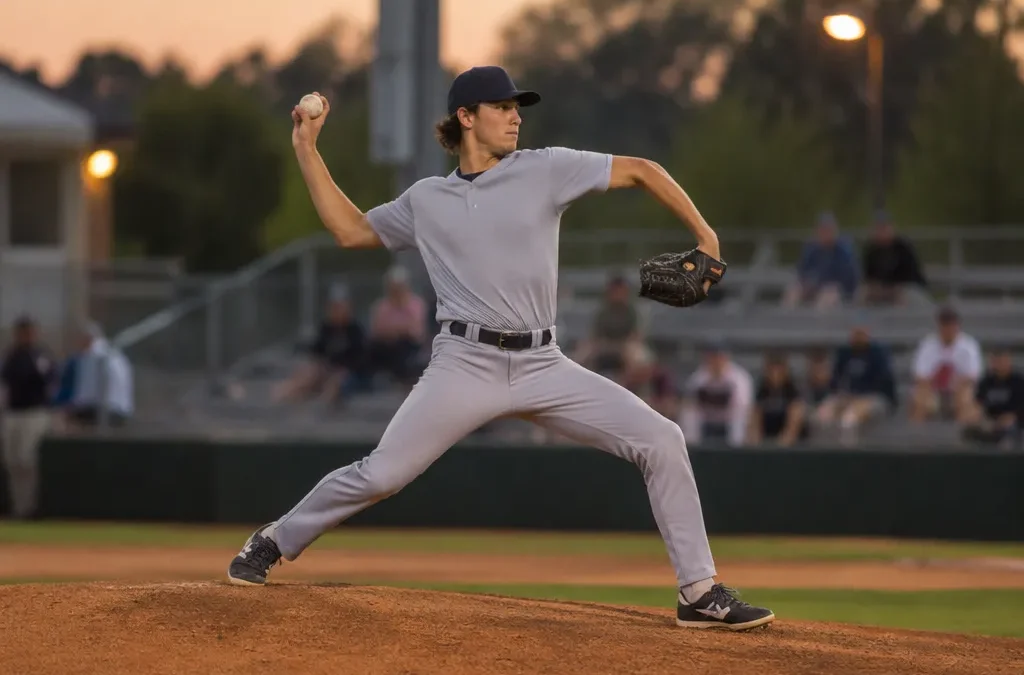
Most minor league baseball players make somewhere between about $18,000 and $45,000 a year in base salary. In the 2026 season, the weekly minimums run from $710 in the Rookie-level complex leagues to $1,250 at Triple-A, and players now also get paid during spring training and the offseason. That is a big step up from a few years ago, but it is still a small fraction of what a big leaguer earns.
The pay you see on a minor leaguer’s check depends on three things: what level he plays at, what kind of contract he signed, and whether he is on a team’s 40-man roster. Signing bonuses are the wild card that can turn a modest salary into life-changing money for a small group of top prospects.
Minor league salary by level in 2026
Every MLB team runs a player development system of four full-season minor league affiliates plus complex league teams. Pay across all of those minor league teams is set by the collective bargaining agreement between MLB and the MLB Players Association, which has represented minor leaguers since 2022. The minimums rise each year. According to Baseball America, these are the weekly minimums for the 2026 season for players who are not on a 40-man roster:
| Level | Weekly minimum (2026) |
|---|---|
| Triple-A | $1,250 |
| Double-A | $1,040 |
| High-A | $935 |
| Single-A (Low-A) | $885 |
| Rookie (complex leagues) | $710 |
| Spring training and offseason camps | $660 |
| Offseason at home | $260 |
Put together over a full year, Baseball America estimates that a player who spends the entire calendar under contract makes a little over $18,000 at the low end and roughly $44,000 to $45,000 at the top of the minor league scale. Where a player lands in that range comes down to his level, how many weeks he spends there, and whether he gets promoted during the year.
These are minimums, not caps. A team can pay more, and some veterans and players with big league time do negotiate higher salaries. Most players in the lower levels, though, make at or near the minimum.
How much does a Triple-A player make?
A Triple-A player on a standard minor league deal makes at least $1,250 a week during the 2026 season. On top of that he gets a per diem on road trips. Baseball America puts the Triple-A road per diem at $32.50 a day, which adds up to about $2,340 over a season. Triple-A is also the level where call-ups happen most often, so it is the closest a minor leaguer gets to a big league paycheck.
How much does a Double-A, High-A or Single-A player make?
Double-A players make at least $1,040 a week in 2026, High-A players at least $935, and Single-A players at least $885. The gap between levels is modest. The real jump comes with a promotion to Triple-A or a spot on the 40-man roster.
Rookie ball and the complex leagues
The Arizona Complex League and the Florida Complex League are where most newly signed draft picks and many international signees start. The 2026 minimum there is $710 a week. The seasons are shorter than in full-season ball, which is why annual pay at this level is the lowest in the minor leagues.
What the 2023 minor league CBA changed
For most of the history of professional baseball, minor leaguers had no union and no contract of their own. That changed in 2022, when players voted to join the MLB Players Association. In March 2023, the two sides agreed to the first collective bargaining agreement for minor leaguers, covering the 2023 through 2027 seasons.
The deal more than doubled minimum salaries at every level. Before it, a Triple-A player made a minimum of $17,500 for the season and a Low-A player $11,000. Rookie-level players went from $4,800 to $19,800 in the first year of the agreement. The MLBPA keeps an overview of the minor league agreement on its official site.
The key changes that affect pay:
- Year-round pay. Players are now paid during spring training and the offseason, not only during the season. Before 2023, spring training was unpaid.
- Housing. Most players get club-provided furnished housing during the season, and players at Double-A and Triple-A get a single room. Players in Single-A and High-A can take a housing stipend instead.
- Annual raises. The minimums go up each season, which is why the 2026 numbers are higher than the 2023 ones.
- Benefits. Players get health coverage, meals and per diem during the season, plus education support.
The minor league deal runs through the 2027 season, one year longer than the MLB contract, which expires in December 2026. Any changes to minor league pay after that will come out of the next round of bargaining.
Offseason pay and spring training pay
Offseason pay used to be zero. Players had to find winter jobs, coach youth teams or give lessons to cover rent from September to March. Under the current CBA, a player at home in the offseason gets $260 a week in 2026, and a player in spring training or at an offseason camp gets $660 a week.
That still is not a full salary. Plenty of minor leaguers keep side jobs in the winter, but they are no longer working for free during spring training, which was one of the biggest complaints before the union era.
Signing bonuses: where the real money is
For top prospects, the signing bonus matters far more than the weekly salary. Draft picks in the first ten rounds are assigned slot values, and each MLB team gets a bonus pool based on its picks. In the 2026 draft, the No. 1 overall pick carried a slot value of $11,350,600, the largest since the bonus pool system began in 2012.
The money drops off fast after the first round. Most players drafted in later rounds sign for far smaller amounts, and many undrafted free agents sign for little or no bonus at all. International amateurs, mostly from Latin America, sign under a separate bonus pool system. A handful get seven-figure bonuses. Most get much less.
That split is why two teammates at the same level can live very different lives. One may have a seven-figure bonus in the bank while the other is living on the weekly minimum.
40-man roster players earn more
Once a team adds a player to its 40-man roster, he signs a major league contract, even if he keeps playing in the minors. That changes his minor league pay. For 2026, a player on his first major league contract earns at least $63,600 for his time in the minors. A player on his second or later major league contract earns at least $127,100 in the minors.
Being on the 40-man roster also means health benefits under the MLB agreement and a quick path to a call-up. That is why a 40-man spot is one of the biggest financial milestones in a minor leaguer’s career.
How minor league pay compares to the MLB minimum
The MLB minimum salary for 2026 is $780,000. A player earns it on a daily basis for every day he spends on the active roster or injured list, which works out to more than $4,000 a day during the season. A Triple-A player on the minimum makes about $1,250 for a full week.
That gap explains why a September call-up to the major league roster, or even a few days in the big leagues, can be worth more than a whole season in the minors. It also explains why so many players hang on in Triple-A for years, waiting for one more chance.
What about independent league baseball?
Independent leagues such as the Atlantic League, the American Association, the Frontier League and the Pioneer League are not part of the MLB system. They are MLB partner leagues, but their players are not covered by the minor league CBA. Each league sets its own salary rules and team salary caps.
Independent league players are typically paid only during the season, often by the month, and most make well below the affiliated minimums. Many play indie ball, whether as a pitcher trying to add velocity or a hitter coming off a release, because it keeps them in front of scouts. Every year, MLB teams buy the contracts of some independent league players and bring them into affiliated baseball, where the pay is higher and the path to the majors is clearer.
What else affects a minor leaguer’s income
- Promotions. Moving up a level means a higher weekly minimum starting right away.
- Time in the organization. Players who are released lose their salary and have to find a new team or head to an independent league.
- Endorsements and card deals. Top prospects can earn money from trading cards and equipment deals, but most players do not.
- Winter ball. Some players earn extra money playing winter leagues in Latin America.
If you want to understand the business side of the teams themselves, our guide to minor league sports business explains how clubs make money. For the level-by-level setup of the farm system, see our overview of minor league baseball, and for current headlines check the latest news from MiLB. If you are heading out to a game, here is how long a minor league baseball game lasts.
Quick answers
How much does a minor league baseball player make a year?
Most make between about $18,000 and $45,000 in base salary for the full year in 2026, depending on level and time under contract. Top prospects can make much more through signing bonuses.
Do minor league players get paid in the offseason?
Yes. Since the 2023 CBA, players receive $260 a week at home in the offseason and $660 a week in spring training or offseason camps in 2026.
Can you make a living as a minor league baseball player?
A modest one. The 2023 CBA made it far easier to get by, because players now get paid year-round and most get housing during the season. Still, a player earning the minimum in the lower minor leagues makes less than many entry-level jobs, and the career is short and uncertain.
Do minor league players have other jobs?
Many do in the offseason. The $260 weekly offseason pay helps, but plenty of players still coach, give private lessons, work at training facilities or take regular jobs over the winter. Players with large signing bonuses usually do not need to.
Do minor leaguers get free housing?
Most do during the season. Teams provide furnished housing, with single rooms at Double-A and Triple-A. Single-A and High-A players can choose a stipend instead.
How much do minor league players make per game?
Minor leaguers are paid weekly, not per game. At the 2026 Triple-A minimum of $1,250 a week, with six games in a typical week, that works out to roughly $200 a game.
Summary
Minor league baseball salaries in 2026 range from $710 a week in Rookie ball to $1,250 a week at Triple-A, with offseason and spring training pay on top. The first union contract in 2023 more than doubled pay and added housing, but most players still earn a modest living compared to the $780,000 MLB minimum. Signing bonuses and a spot on the 40-man roster are what separate the well-paid minority from everyone else.